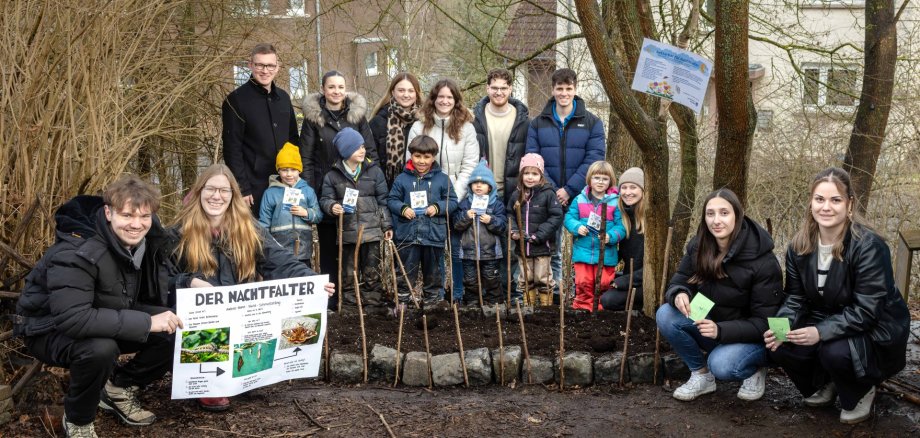
First, the trainees gave a child-friendly presentation during the morning circle time, explaining what a moth is, what a “nectar bar” is, and why it’s so important for moths. The children learned that moths make up a large portion of the local butterfly species and are urgently dependent on suitable food plants. Then it was time for hands-on learning: With great enthusiasm, the children shoveled soil into their little wheelbarrows, scattered seeds, and built a fence out of hazelnut branches. Through this hands-on activity, the young volunteers learned in a playful way which plants provide food for moths and their caterpillars and how important it is to create habitats for endangered species.
The result was a colorful flower bed that will provide food and shelter for many moths. The project combines vocational training and environmental education in a unique way: The apprentices were able to apply their knowledge in a practical way and take on responsibility, while the “garden kids” gained direct access to nature and actively contributed to species conservation themselves. Together, they sent a strong message in support of biodiversity and demonstrated how even small initiatives can have a big impact.
After the afternoon nap, the day came to a calm and creative close. The children had the opportunity to color mandalas featuring butterfly motifs, which helped them improve their concentration and fine motor skills. At the same time, a trainee read various stories aloud, which created a relaxed atmosphere for the children and encouraged them to enjoy listening. The children participated in both activities with great interest and enthusiasm.