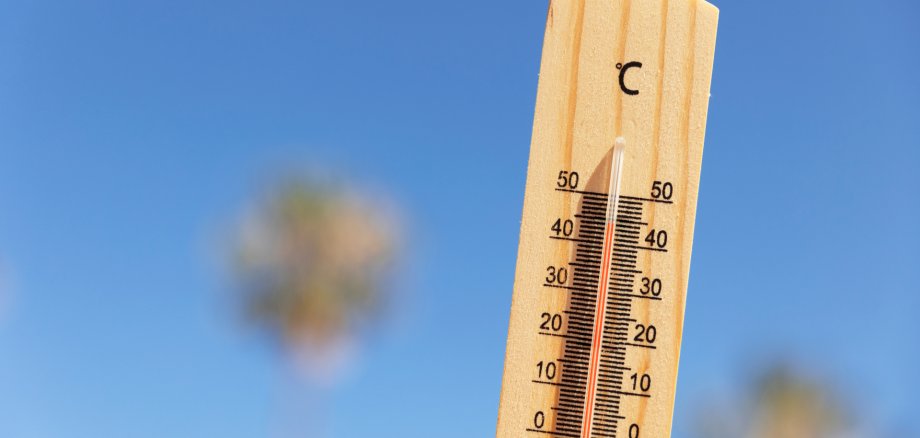
Heat warning level 2 will be in effect in the Fulda district today, Tuesday.
The Fulda District Health Department is therefore once again reminding the public of the following tips for dealing with the heat:
- Know when it’s going to get hot. Keep an eye out for heat warnings in the media or use the information resources from the German Weather Service (DWD) described below. This is the best way to prepare for the upcoming heat.
- Avoid the heat. Adjust your daily routine: Spend as little time as possible outdoors between 11 a.m. and 5 p.m., except in places that are cooler than your home. Avoid strenuous outdoor activities during these hours.
- Drink plenty of fluids and eat light meals. Make a conscious effort to drink plenty of fluids—about 2–3 liters per day. Water is best. If you have heart or kidney disease, talk to your doctor about adjusting your fluid intake. Eat light, fresh, and cool foods. Good choices include vegetables, salads, fruit, and low-fat milk and dairy products. Avoid fatty foods and large amounts of meat.
- Cool your body. Water is the best way to cool down. For example, apply cool, damp compresses to your arms, legs, forehead, or neck. Take foot baths or hold your forearms in or under cool water. Often, simply wetting your skin with a little water is enough to help. Alternatively, cooling lotions or sprays can also be effective.
- Keep your home cool. During periods of extreme heat, keep windows and doors closed during the day. It’s best to ventilate only when it’s cooler outside than inside your home. This is usually the case at night or in the early morning hours. If possible, shade the windows with shutters, roller blinds, or awnings. Ensure there’s air circulation in the room. If you use an air conditioner, be careful not to set it too cold, as this increases the risk of catching a cold.
- Put your medications to the test. During your next visit, ask your doctor about how well your medications tolerate heat. Also, be sure to follow the instructions in the package insert.
- Look out for those around you. Offer your help when needed. During hot weather, be sure to stay in touch with family, friends, or neighbors.
- Take action in an emergency. In extreme heat, you may first experience heat exhaustion and, in the worst case, heat stroke. Typical symptoms of heat exhaustion include cold, clammy skin; low blood pressure with a rapid pulse; and rapid but shallow breathing. These are accompanied by loss of appetite, nausea, dizziness, and fatigue. As soon as you notice these symptoms, you should drink something cool (e.g., mineral water) and cool your body down (e.g., a lukewarm shower, arm baths). If your condition does not improve within the next hour or if your body temperature reaches 38°C (measured with a clinical thermometer), you need medical attention to prevent heatstroke.
In cases of heatstroke, the skin is red, hot, and dry. Nausea, headaches, altered consciousness, and loss of consciousness are other possible signs of heatstroke and require immediate medical attention. In such a case, call emergency services (112) immediately if someone is suffering from heatstroke.
Background on the alert levels:
“In response to the extremely hot summer of 2003, the Hessian Warning System was introduced in 2004 by the then Ministry of Social Affairs in collaboration with the German Weather Service (DWD) to protect elderly people in care facilities, in particular, from the health effects of heat,” according to the Hessian Ministry for Family, Senior Citizens, Sports, Health, and Care.
There are two alert levels:
Heat Alert Level 1 warns of severe heat stress. It is triggered when the perceived temperature exceeds 32°C.
Heat Warning Level 2 warns of extreme heat stress. It is in effect when the perceived temperature exceeds 38°C or when Heat Warning Level 1 persists for four consecutive days.