Protection of the Night
Nature conservation efforts in the Fulda district also focus on nocturnal species. Reducing light pollution and thereby protecting natural nighttime landscapes are particular priorities in the Rhön Star Park. Grants and consulting services are available to organizations, businesses, and individuals for the planning and retrofitting of lighting systems.
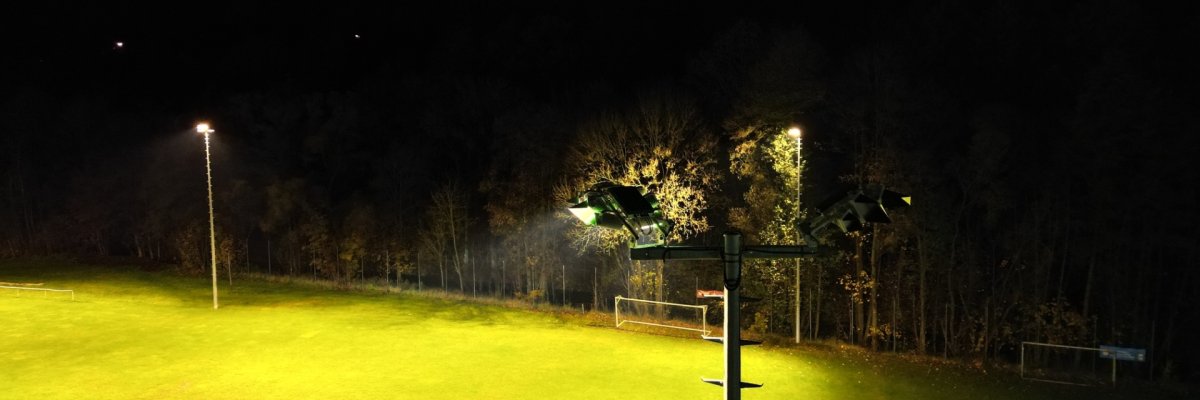
For Clubs: Upgrading Floodlight Systems
Sports fields are important gathering places for clubs and play a vital role in youth and community life. At the same time, floodlight systems—especially older models—contribute significantly to light pollution. The Fulda district therefore supports clubs that plan or retrofit the lighting systems at their sports facilities to comply with the Sternenpark guidelines, as part of its funding guidelines for club and youth work.
To be eligible for funding, specific technical and conservation standards must be met. These standards ensure that the light remains focused on the playing field, energy is conserved, and the impact on valuable habitats in the surrounding area is minimized.
The Fulda District provides clubs with advice, lighting design reviews, and technical support. Clubs can find detailed information in the download section on this page.
For Businesses: #lightawareness Certification
Through the #lichtbewusstsein designation, the Fulda Chamber of Industry and Commerce, in collaboration with the City and District of Fulda, recognizes companies that, through the mindful use of outdoor lighting, take the protection of the night into account and thereby make an important contribution to biodiversity, energy conservation, and an aesthetically pleasing townscape and nightscape.
Companies that are committed to sustainability and effectively reduce light pollution can apply for the certification.
For Real Estate, Home Construction, and Planning
There are many ways to reduce light pollution. Individuals, businesses, and local governments can use the following questions as a guide:
- Is artificial outdoor lighting really necessary?
- How long does the lighting need to stay on?
- In which areas is lighting needed (directing light onto the usable area)?
- Which light source (bulb) is suitable?
When choosing a light source, look for a warm light color of up to 3,000 Kelvin—or even better, up to 2,700 Kelvin. Also consider the light output: 200–300 lumens are sufficient for private homes, while 500 to a maximum of 800 lumens are sufficient for larger (yard) areas.
Existing lighting systems can also be improved through retrofitting:
- Light Distribution: Can the light fixture be adjusted retroactively so that it shines only on the usable area?
- Light Color: Using a filter film can make harsh light appear warmer.
- Scope and Duration of Lighting: To what extent—that is, how much—light is used?
- Smart Lighting: Are properly configured motion sensors—or, better yet, timers—being used to control the lights based on need?
The administrative bodies of the Rhön UNESCO Biosphere Reserve, in cooperation with the Rhön district offices, have published application-specific planning guidelines on the topic of environmentally friendly lighting. These cover the parameters of light distribution, intensity, and color, and thus incorporate relevant standards such as the Technical Rules for Workplaces. You can find the brochures on this page in the download section.