Rural Regional Development Based on LEADER Principles
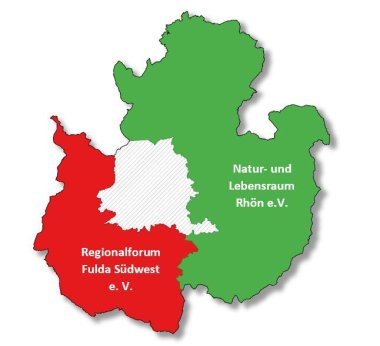
The rural areas of the Fulda district should continue to be preserved as attractive places to live, particularly in light of future population trends.
The EU’s LEADER funding program plays a crucial role in this regard: By supporting strategic and structural investments, it helps develop regional markets, secure jobs, and sustainably improve the quality of life in local communities.
Within the Fulda district, there are two Local Action Groups (LAGs) recognized by the Hessian Ministry of Agriculture and the Environment, Viticulture, Forestry, Hunting, and Heritage: Regionalforum Fulda Südwest e.V. and Natur- und Lebensraum Rhön e.V. With the help of the Regional Development Strategy (LES), they form the basis for all funding under regional development and the LEADER principles (see related links).
Objectives of LEADER
- Creating equal living conditions in urban and
rural areas; improving quality of life by strengthening infrastructure and enhancing the appeal of rural regions as places to live, work, and relax - Focus on
Sustainability: Resource Conservation, Combating Climate Change, and Preserving an Intact Environment to Protect Biodiversity
The Concept of Intermunicipal Cooperation: Collaboration across municipal boundaries and the involvement of various social and economic groups to ensure quality of life
Eligible Projects
Information and Consulting Services, Concepts
This funding supports the sustainable and future-oriented development of rural regions by establishing a strategic planning framework, developing and promoting innovative and modern solutions to address regional challenges, and raising awareness among and fostering collaboration between local stakeholders.
The objectives of the funded projects are, in particular,
- improving public services
- the creation of equal living conditions for all segments of the population
- the development of extracurricular educational programs and climate-friendly mobility solutions
- promoting regional economic development and rural tourism
- raising awareness of sustainable consumption
- the preservation of nature and the landscape as part of the implementation of the Local Development Strategy.
Investments in rural infrastructure to ensure equal living conditions
The funding program aims, as part of the implementation of the Local Development Strategy, to maintain, supplement, and expand rural infrastructure services that go beyond basic public services in order to ensure equal living conditions.
The funded projects should also help improve intergenerational equity in the regions, develop them into sustainable places to live and work, and demonstrate a spirit of innovation.
The implementation also focuses on climate-friendly services that complement the existing mobility infrastructure, extracurricular educational infrastructure, and infrastructure projects with regional impact that help the rural population adapt to changing living and working habits.
Facilities for local basic services and public service projects
This program is aimed at projects designed to improve public services, as well as at facilities established to provide basic services to rural populations. “Basic services” refers to meeting the population’s needs for goods or services—ranging from daily to weekly needs, as well as irregular needs that may, under certain circumstances, require urgent local provision or are essential for survival.
Funding will be provided in particular for:
- Health-related service providers and medical care providers operating at the local level, selected in accordance with Chapter 4 of SGB V (e.g., contracted physicians, providers of therapeutic treatments and medical devices, pharmacies, pharmaceutical companies, and other services such as home nursing care, home health aides, and midwives).
- Local retail establishments selling everyday goods with a sales area of up to 400 square meters.
- Cultural and educational institutions, leisure and recreation facilities, and organizations providing services for children, youth, adults, and seniors with a local and/or regional impact.
Start-up and Growth of Microenterprises
Microenterprises are an important component of rural economic strength. They foster local economic development and provide skilled jobs and training opportunities. However, structural changes, a lack of opportunities for starting new businesses, and unresolved succession issues hinder modern growth and stifle economic development potential in these regions.
The goal is to provide incentives for the establishment and development of microenterprises in rural regions based on the local development strategy. In particular, this initiative aims to tap into innovation potential and contribute to securing and creating jobs. Greater importance is attached to strengthening inland areas and increasing regional value creation through the funded projects.
Funding is available for microenterprises with fewer than 10 employees and an annual turnover or annual balance sheet total of less than 2 million euros, as defined by the SME definition.
Establishment and Development of Microenterprises Providing Basic Services
Micro-enterprises providing essential services play a vital role in ensuring local access to services in rural areas of Hesse and provide skilled jobs and apprenticeship opportunities. However, structural changes, demographic shifts, and changing lifestyles are putting the existence of these service providers at risk.
The goal of this funding is to support the needs-based establishment and development of microenterprises that, in accordance with the Local Development Strategy, contribute to securing, creating, improving, and expanding basic services for the rural population. Basic services include offerings designed to meet the population’s needs for goods or services—ranging from daily and weekly needs to irregular needs—that must be provided locally under certain circumstances, are urgent, or are essential for survival. For goods or services in the aforementioned sense that, by their nature, are primarily offered or provided regionally—that is, within a 50-kilometer radius of the municipality where the business is located—it can be assumed that they regularly serve basic services.
Funding is available for microenterprises with fewer than 10 employees and an annual turnover or annual balance sheet total of less than 2 million euros, as defined by the SME definition.
Establishment and Development of Small Tourism and Hospitality Businesses
Tourism and the hospitality industry are indispensable components of rural regional development due to their contribution to regional value creation and to ensuring equitable living conditions. Currently, factors such as structural changes, unresolved business succession issues, and a lack of opportunities for new business start-ups are driving the need for modern, forward-looking development in the industry and hindering its potential for growth.
The goal is to establish and develop small businesses in the tourism and hospitality sectors in response to local needs, based on the Local Development Strategy. This initiative thus specifically supports public investment projects through entrepreneurial engagement.
The funding is aimed in particular at micro and small businesses that support the development of tourism in rural areas, contribute to improving quality, and help address existing gaps in service offerings. Within the framework of this funding program, special emphasis is placed on creating jobs and training opportunities, strengthening rural areas, and increasing regional value creation.
Funding is available to small businesses with up to 49 employees and an annual revenue or annual balance sheet total of less than 10 million euros, as defined by the SME definition.
Projects for Rural Tourism Development and Local Recreation
The funding objective is to promote rural tourism in these regions and establish them as local recreation areas as part of the Local Development Strategy, thereby strengthening regional value creation. Incentives are being created to support needs-based improvements to tourism-related infrastructure in rural areas and to contribute to the development of recreational areas.
Through accompanying processes in project development, management, and marketing, the sustainability of the initiatives is enhanced and effective project evaluation is promoted. The quality of new and existing offerings is improved, and this helps raise awareness.
Investment and non-investment projects in the bioeconomy and sustainable consumption
The funding objective is to develop and strengthen measures, processes, and products aimed at creating a sustainable, resource-efficient, and future-proof economic system, taking into account bioeconomic approaches, solutions, and potential based on the Local Development Strategy. The funded projects should also raise awareness of sustainable consumption patterns, promote the creation of the necessary structures—such as regional value chains and networking structures—and contribute to the preservation of nature and the landscape.
Regional Budget
The goal is to implement the objectives outlined in the Local Development Strategy by creating a low-threshold funding program for local stakeholders in accordance with the objectives of the GAK Framework Plan. The regional budget thus supports committed, active, and self-directed rural development and contributes to strengthening regional identity. The funding program enables the implementation of small-scale projects that serve to carry out a Local Development Strategy.
Capital and non-capital projects to support the processing and marketing of regional food products
The funding program is designed to provide targeted support for projects that strengthen the processing and marketing of regional food products, incorporating regionally produced agricultural goods. The goal is to expand regional value chains, ensure a supply of high-quality food from the region, and sustainably promote the local food industry.
Funding is provided in particular for practical projects that make a concrete contribution to improving the regional supply structure, promoting decentralized processing, and enhancing logistics efficiency.
In addition, funding is provided for projects that raise consumer awareness of the origin and quality of regionally produced food, as well as its importance and benefits, thereby encouraging consumers to make informed purchasing decisions that support regional agriculture.
Communication strategies and projects for sales promotion may be funded exclusively for food products that exceed legal standards, such as those bearing the State of Hesse’s quality labels “Geprüfte Qualität Hessen” and “Bio aus Hessen.”
Process and Procedures
1. Funding review of the project by the project sponsor
Based on the funding opportunities outlined above, it is possible to assess whether the planned project can be preliminarily classified under the Guidelines for the Promotion of Rural Regional Development (LEADER) and the Processing and Marketing of Regional Food Products (see related links).
2. Consultation and coordination with regional management and the granting agency
During an initial consultation, the project sponsor receives joint guidance from the relevant Local Action Group—either the Regionalforum Fulda Südwest e.V. or the Natur- und Lebensraum Rhön e.V.—as well as from the responsible granting authority, the Fulda District (Regional Development Department).
The Fulda Grant Office coordinates the joint consultation meeting with the regional management team and the project sponsor.
During this meeting, the granting agency will clarify questions regarding eligibility for funding in accordance with the applicable guidelines. At the same time, the Local Action Group will assess the project’s eligibility for funding based on the content of the respective Local Development Strategy.
3. Consultation and Selection by the Decision-Making Body
The LEADER Decision-Making Committee prioritizes the submitted project proposals based on qualitative criteria in accordance with the currently valid catalog of project selection criteria.
Only those projects that have been deemed eligible for funding in principle by the granting agency will be prioritized.
4. Submit a grant application through the LaWiLe Portal in Hesse
The grant application must be submitted by the project sponsor via the LaWiLe Portal Hessen (see related links).
The Fulda County grant-awarding authority reviews the application and, if approved, issues the grant award notice.
5. Implementation and Payment
Upon receipt of the grant award notice, the project can be implemented in accordance with the guidelines set forth therein, and applications for the disbursement of the grant funds can be submitted in stages.
Note: No contracts may be awarded or investments initiated before the written grant notification is received.
The project is co-financed by the European Union with funds from the Joint Program for the Improvement of Agricultural Structures and Coastal Protection.